What It Takes to Create a Tennessee State Park

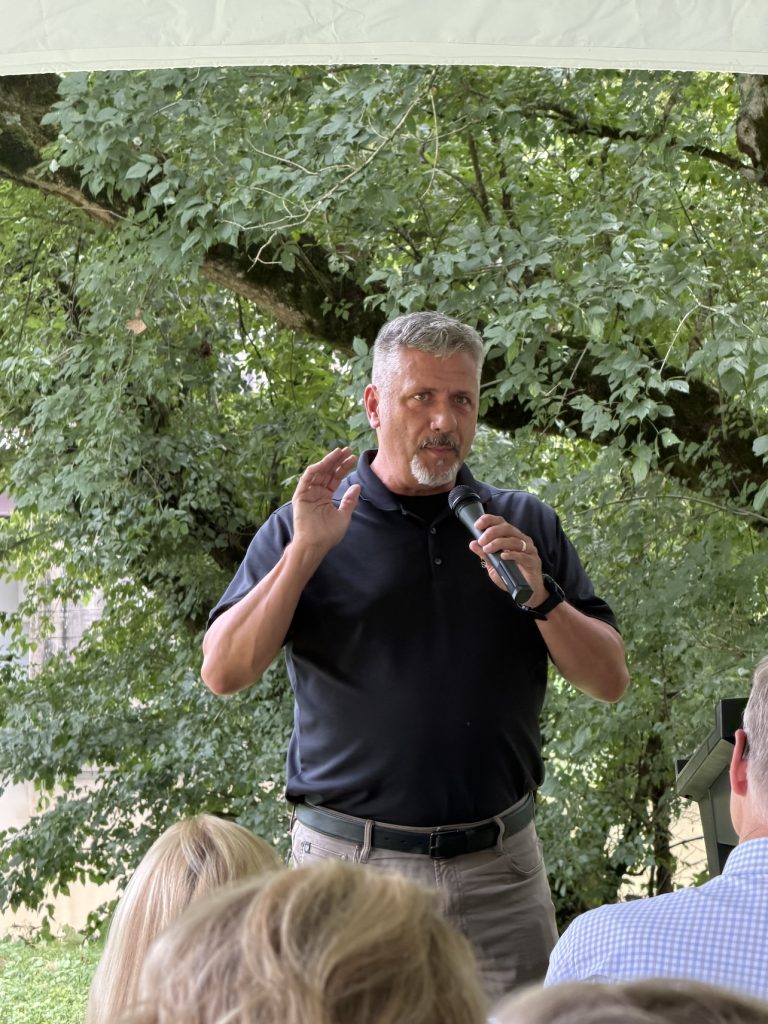
Tennessee State Parks staff gather at the site of a future state park/Ryan Jenkins
During Governor Bill Lee’s second term, Tennesseans have witnessed unprecedented growth in the state park system.
Through legislative support and a bold vision for state parks, Lee’s administration has funded a record-setting 15 new state parks. This marks the greatest number of new state parks established under a single administration in Tennessee State Parks history.
These new parks are located across the state.
How did officials select the new state park locations? How do they establish a plan for opening them? And what will each park highlight about Tennessee’s landscape or important historical events?
We asked Chris Padgett, Director of Tennessee State Parks, and Ryan Jenkins, Deputy Director of Park Operations, to walk us through the journey.
How Does the State Pick a Site to Become a State Park?
Chris Padgett: For Tennessee State Parks, it always starts with the resource.
We don’t begin by looking at a map and deciding that a particular county or part of the state needs a state park. Geographic distribution can certainly be a consideration, but it isn’t what makes a place worthy of becoming a state park.
There first must be something significant there; a natural, cultural, historic or recreational resource that is worth protecting and that helps us tell the story of Tennessee and Tennesseans.
From there, we look at whether the property can provide a meaningful visitor experience, whether the resource can be protected appropriately, the availability of land, opportunities for partnerships, community support, long-term operational needs and whether we can responsibly care for the property for generations to come.
In many cases, all those things must align at the right time. That is why some park ideas develop over a period of years before they ultimately become part of Tennessee State Parks.
Who Is Involved in Planning a New State Park?
If I walked into the very first planning meeting for a new park, who would be sitting around the table, and what would each person be thinking about?
Chris Padgett: One of the things people may not realize is how many different disciplines come together to create a state park.
You would have people representing park operations, planning and facilities, natural and cultural resource stewardship, interpretation, land acquisition, finance and administration, along with regional staff and, at different points in the process, local governments and other partners.
Each person is looking at the same property through a slightly different lens.
Someone is asking what resources absolutely must be protected. Someone else is thinking about how visitors will experience and understand the place. Operations staff are thinking about safety, staffing and what it will take to maintain the park twenty years from now.
Facilities staff are considering roads, utilities, trails and buildings. Real property staff may be looking at boundaries, access and future acquisitions.
The challenge, and really the purpose of the planning process, is bringing all those perspectives together into one shared vision for the park.
How Many Site Visits Does the Planning Team Make?
This is a team process; how many times do you do site visits?
Ryan Jenkins: During the master planning process there could be as many as 10 site visits by the planning team and/or leadership.
This number increases when you consider the Area Manager and additional divisions within the Bureau of Conservation.

How Long Does the Planning Process Take?
Ryan Jenkins: The master planning process takes at least nine months.
This does not include pre-planning that occurs before the park is approved by the Legislature or the major construction and improvement projects. planning process.
How Do You Involve the Local Community in the Process?
Ryan Jenkins: For the master planning process, there are a minimum of three in-person engagement opportunities, plus an online survey opportunity.
These opportunities vary in scope, but all allow the public and local community to share feedback and input on the development of the new park.
How Do You Determine How Many Staff Will Be Needed?
Chris Padgett: There isn’t a simple formula based on acreage or anticipated visitation.
We start by looking at what it will take to safely and effectively operate that particular park and provide the level of visitors’ experience people expect from Tennessee State Parks.
We consider the size and geographic footprint of the park, anticipated visitation, the number and type of facilities, trails and recreational opportunities, maintenance requirements, resource protection needs, interpretation and programming, law-enforcement and emergency-response responsibilities, and whether the park will have campgrounds, visitor centers or other significant operations.
One of our best tools is also our own experience. We look at existing Tennessee State Parks with similar levels of complexity and use them as barometers.
Those parks give us real-world information about the staffing levels, equipment and operational funding required to successfully manage a comparable operation.
We also know those needs can change. The staffing required when a park initially opens may look different five or ten years later as facilities are added, visitation increases and the park matures.
What Would Surprise People Most About Creating a Tennessee State Park?
To someone outside of state parks, what would surprise them the most about establishing a new state park?
Ryan Jenkins: I think they would be surprised by how much teamwork it takes across the multiple divisions within the Bureau of Conservation and our external partners to start from a park idea to the dedication and opening of a new Tennessee State Park.
Chris Padgett: Probably how much has to happen before anyone ever cuts a ribbon.
People understandably see the finished product, the entrance sign, the trails, the visitor center or the park staff welcoming visitors. What they don’t see are the years of work and hundreds of decisions that may have come before it.
There can be land acquisition, surveys, natural and cultural resource assessments, archaeological work, master planning, public engagement, facility design, utilities, roads, trails, budgets, equipment purchases, hiring and training, signage, interpretation, partnerships with local communities and coordination across multiple divisions of state government.
Ryan’s point about teamwork is exactly right. No single person or division can stand up a new park. It takes people with very different areas of expertise to work toward the same goal.
And throughout all those decisions, there is a tension we must manage carefully: How do we invite people to experience this place while making sure the very resource that justified creating the park is protected?
Is Planning for a River Park Different From a Traditional Park?
Ryan Jenkins: The main difference when planning for a river park is that traditional parks are normally one encompassed land mass to plan for while a river park many times includes multiple land parcels along the length of a river, separated sometimes by many miles.
Conservation, Hiking in Tennessee, Outdoor Recreation, Support Tennessee State Parks, Tennesse State Parks Conservancy, Tennessee State Parks, Tennessee State Parks Conservancy